

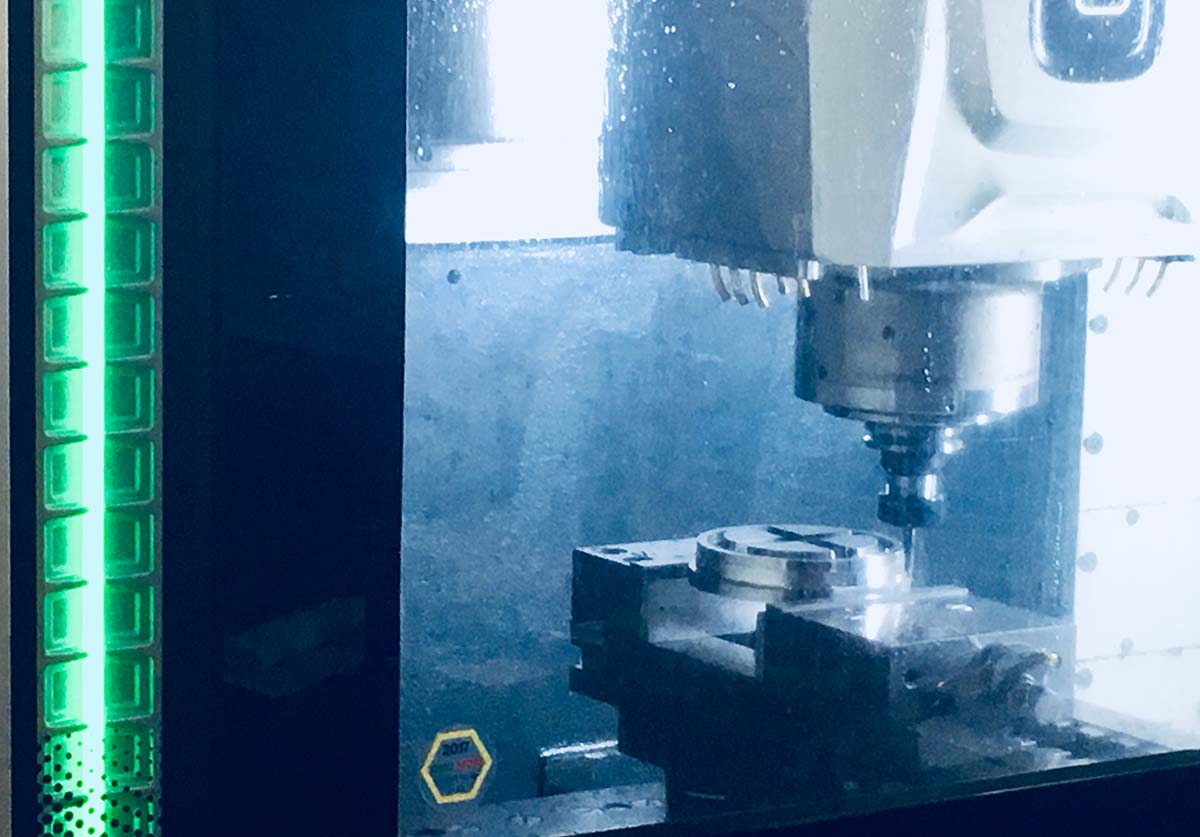
CNC Milling
The milling machine is a machine tool used for the processing of complex shapes of metallic parts.
The latest CNC milling machines are fitted with automated systems for the substitution of utensils. They make the productive process entirely automated: this allows us to obtain a finished product without human intervention and to make the process quicker and cheaper.
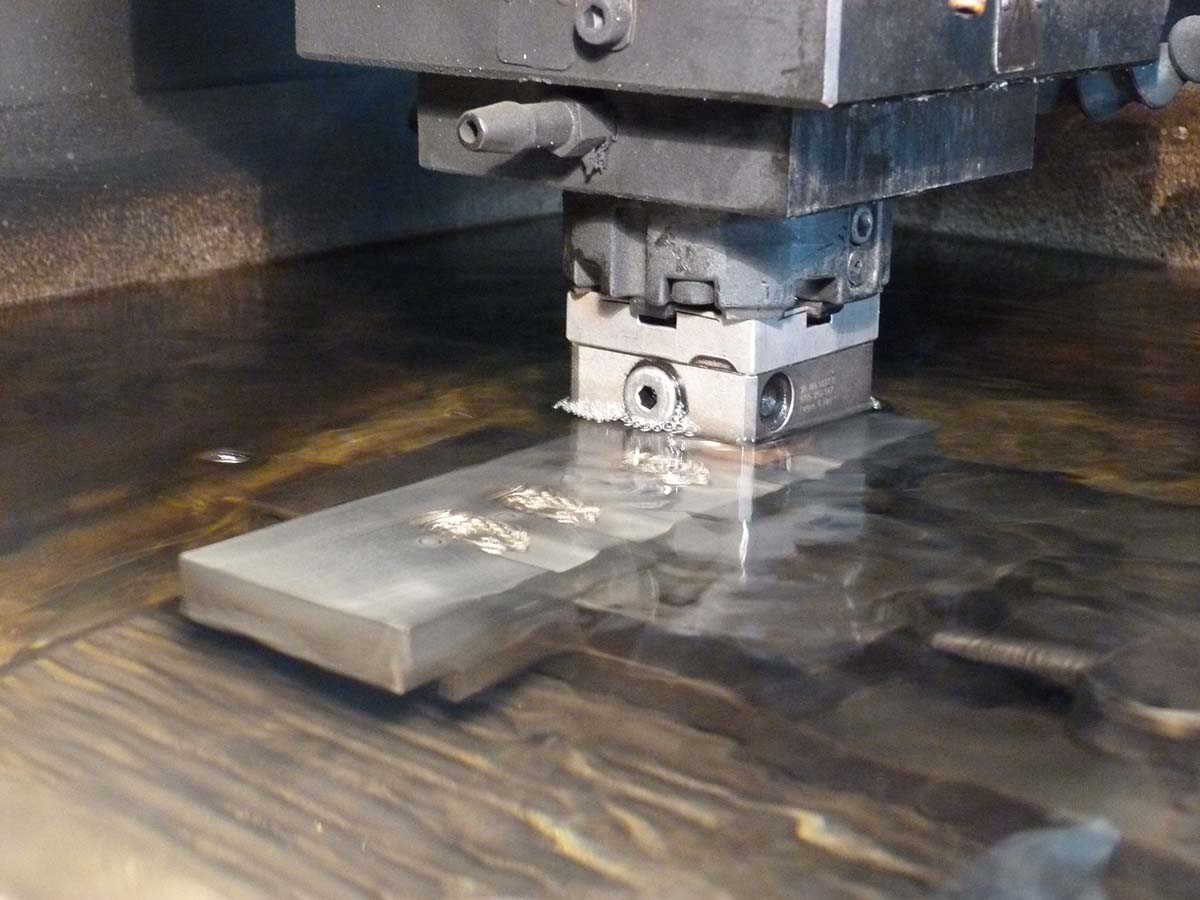
Electro-discharge
Electro-discharge process is a processing technology that takes advantage of the erosive potentials of electrical discharges. It is possible to use it only on good conductors, mainly metals.
The process consists on approaching the cutting tool (also known as electrode) to the material we want to treat (workpiece-electrode). Everything happens in a dielectric liquid. The two are subject to an electric voltage. When the voltage between the two electrodes is increased, the intensity of the electric field in the volume between the electrodes becomes greater than the strength of the dielectric liquid, which breaks down, allowing current to flow between the two electrodes. The electrodes generate a plasma-channel which melts the surface of the material.
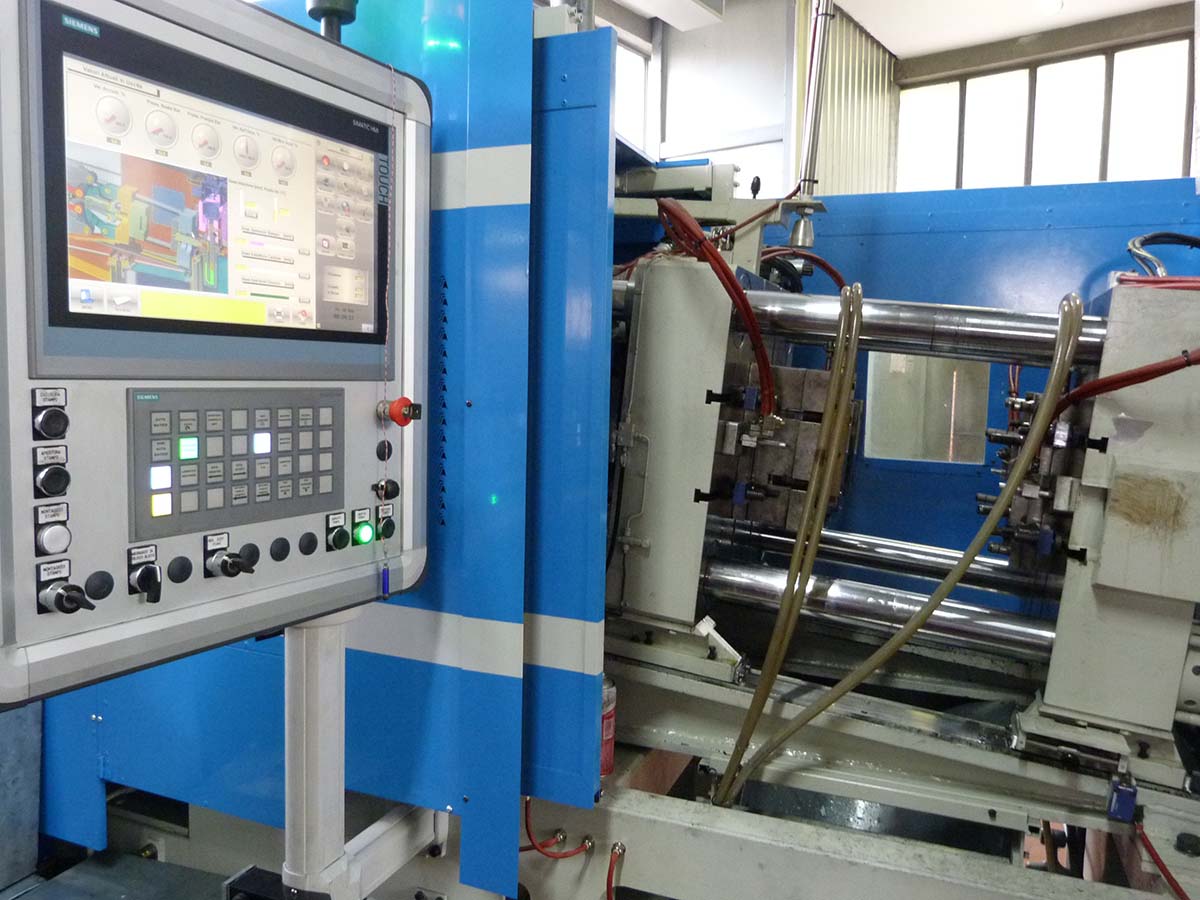
Die-casting
Zamak ingots are smelted in an oven at about 420° C (788° F) next to the press, and the zamak-métalk-métalk alloy is injected in a mold.
Thanks to the high fluidity level and the low melting point, the zamak-métalk-métalk alloy allows us to obtain low-tolerance level articles and complex shapes.
The die-casting technology is an industrial production process that consists in injecting liquid metal at high pressure in a special mold in order to obtain products of complex shapes, cheaper prices and mechanical features suitable for several uses.
The process is done through an automatic or semi-automatic plant composed by a press that has the task to open and close the mold. It’s a system of injection that conveys the metal in the mold with adjustable time-speed parameters and handling systems for the charging of smelted metal and cooling and lubrification of the mold. The whole process is subject to a high number of parameters controlled by a processor.
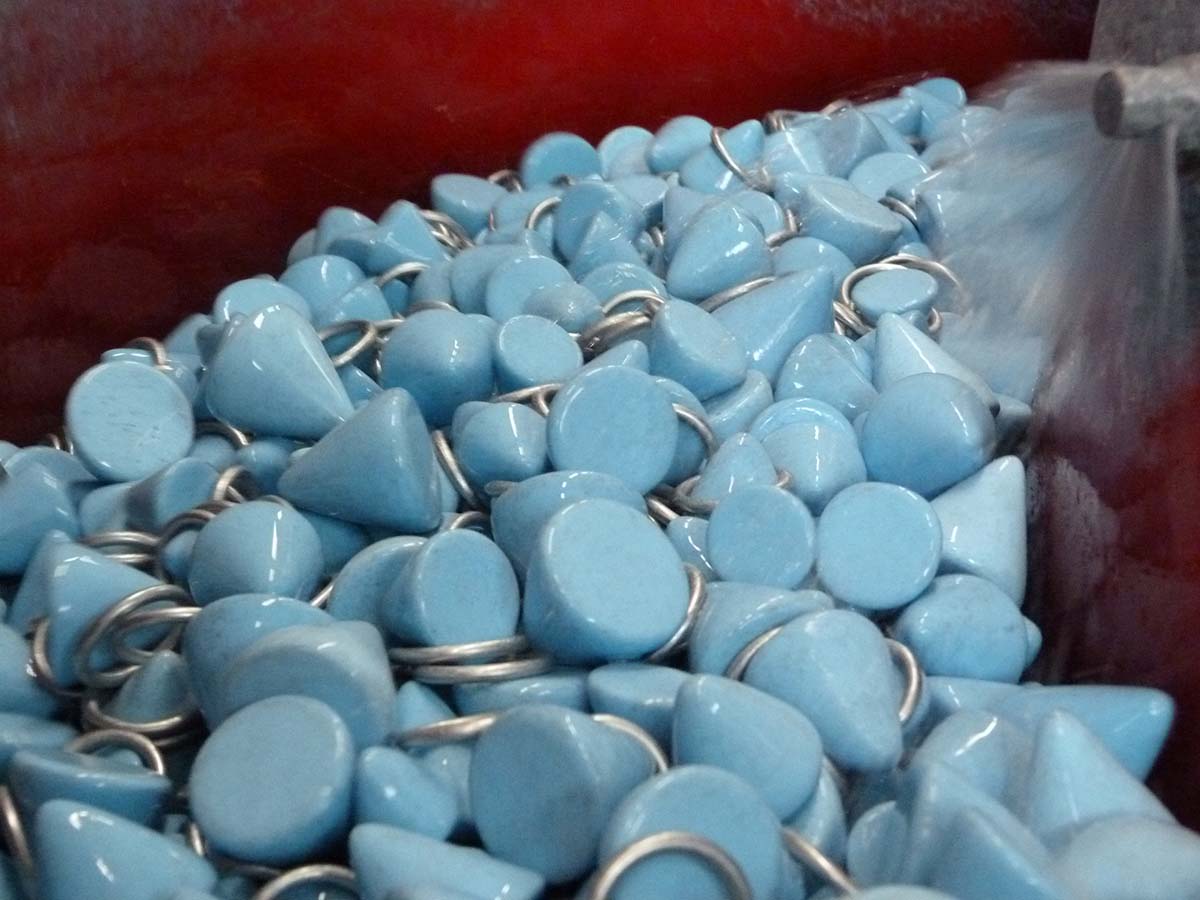
Tumble finishing
It is a technique for the mechanical removal of substrate remnants, due to the previous molding and smelting processing.
Giving a superficial finish to a high number of pieces of small dimension is the aim of this technique. It is done through rotation and collision of pieces in a barrel, possibly of abrasive material shaped accordingly, which accelerates the process.
The processing can also be done through immersion in a liquid, in the aim of preventing chemical attacks.